
The Disappearing Act

The Shortage of African American Male Educators:
Understanding the Causes and Charting a Path Forward
Despite making up less than 2% of the teaching workforce today, African American male
educators once stood as pillars of their communities. This research-based article explores the
systemic causes of their decline, the impact on students of color, and actionable strategies to
rebuild representation in education.
Introduction:
Students of color in underserved neighborhoods often attend public schools within their own
communities. Access to private schools or magnet programs across town is usually limited by
financial constraints and transportation barriers. Once inside these schools, students frequently
encounter an educator workforce that does not reflect their racial or cultural identities.
The U.S. teaching profession remains overwhelmingly female and predominantly
white—approximately 80–85% of public school teachers are white women. Yet what has
concerned me throughout my career as an educator is the near absence of African American
male educators.
Before the landmark Brown v. Board of Education decision, African American male educators
represented about 35% of the teacher workforce within African American communities. Today,
that number has plummeted to less than 2%.
This raises an important question: Where have African American male educators gone? Once
considered intellectual leaders and community anchors, their presence in classrooms has become
alarmingly rare.
Historical Context and Research Purpose:
Historically, African American male educators were viewed as scholars, mentors, and advocates
for youth—what Dr. Leslie Fenwick aptly described as “intellectual powerhouses.” However,
systemic barriers, racialized practices, and institutional neglect have contributed to their
disappearance from classrooms nationwide.
To investigate this phenomenon, I conducted a qualitative study that explored the perspectives
of 18 African American male educators from across the United States. Through surveys, in-
depth interviews, and thematic analysis, I sought to uncover the causes of this shortage and
identify pathways to meaningful change
What the Research Revealed
The participants in my study attributed the shortage of African American male educators to
several interconnected factors. Chief among them was racism—both overt and systemic.
From exclusionary attitudes in teacher education programs at Historically White Institutions
(HWIs) to inadequate funding and rigid accreditation standards imposed on Historically Black
Colleges and Universities (HBCUs), participants described a system that, in many ways, keeps
African American men from entering or remaining in the teaching profession.
They also emphasized the absence of role models throughout their educational journeys. Many
had never been taught by an African American male educator before becoming one themselves.
This lack of representation discouraged young men from seeing teaching as a viable or rewarding
career. Representation, they stressed, is not merely symbolic—it is essential to engagement,
achievement, and belonging.
Four Key Findings
My research identified four core findings that illustrate both the challenges and opportunities
surrounding this issue.
- Guidance Through Experience
Academic success often depends on having leaders who share and understand a student’s lived
experience. When African American male educators serve as mentors, role models, and
“otherfathers”—a term denoting nurturing and protective guidance—they transform classrooms
into spaces of trust and empowerment. Their presence bridges the gap between learning and
lived reality. - Empowering Representation
Although they represent a small fraction of the teacher workforce, African American male
educators bring extraordinary purpose and resilience to their work. Many trace their passion for
teaching to a family legacy of educators, viewing the profession as both an inheritance and a
calling. Empowering representation ensures that all voices are heard in shaping policies that
directly impact diverse learners. - Incentivization
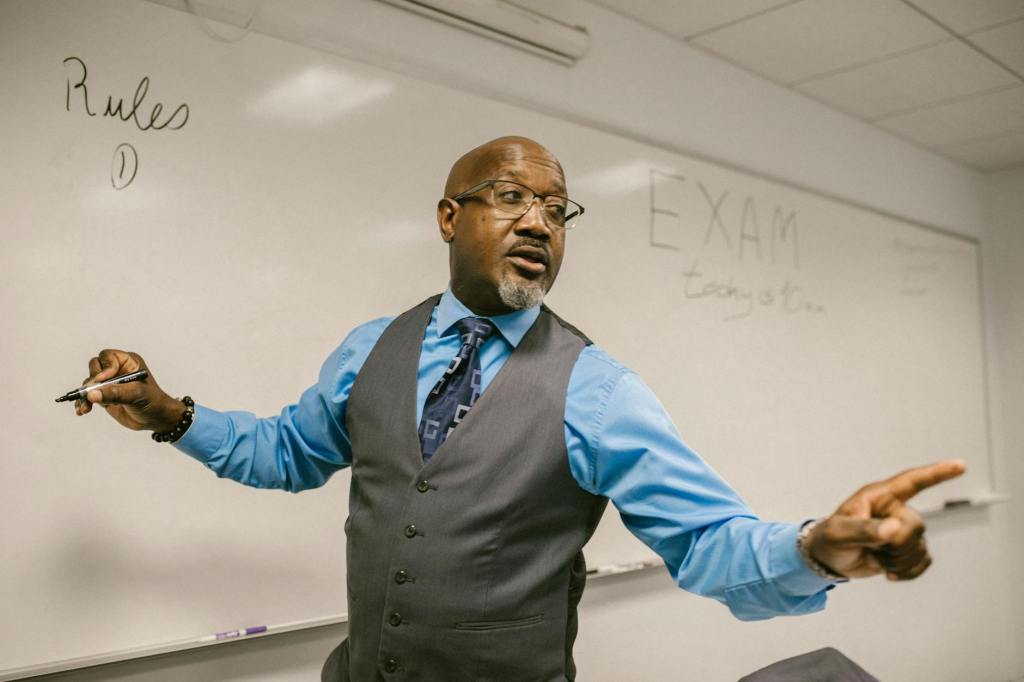
“Teaching, for them, is a purpose-driven life—but institutional support is essential to sustain it.”
While many educators describe teaching as a calling, tangible incentives are critical for
attracting and retaining African American men in the profession. Participants emphasized the
need for scholarships, loan forgiveness, paid internships, and clear career pathways. Teaching,
for them, is a purpose-driven life—but institutional support is essential to sustain it.
- Racialized Practices
Participants identified racialized structures within teacher education and public school systems
as major barriers. Many programs cater primarily to white female candidates, leaving little
cultural relevance for educators preparing to serve students in underserved communities.
At the district level, limited partnerships with HBCUs and inequitable hiring practices further
constrain access. These systemic issues perpetuate the shortage and hinder efforts to diversify the
teacher workforce.
Actionable Recommendations
Addressing the shortage of African American male educators demands bold, intentional reform.
Based on my research, several strategies stand out:
- Establish HBCU–District Teacher Pipelines: Urban districts should partner with HBCUs to create direct pathways from college to classroom.
- Offer Strong Incentives: Scholarships, tuition waivers, and loan forgiveness programs can make teaching financially feasible and attractive.
- Develop Graduate-Level Residency Programs: These should combine classroom experience with mentorship and lead to a master’s degree in education or special education.
- Require Community Teaching Commitments: Graduates should commit to teaching for at least three years in underserved schools following program completion.
Such strategies not only address recruitment and retention but also strengthen the bridge between
institutions of higher education and the communities they serve.
Conclusion: Representation Is Transformative
The shortage of African American male educators is not just a workforce issue—it is a symptom
of systemic inequities in education. My research underscores both the urgency of the problem
and the potential for meaningful change.
By confronting racialized structures, expanding mentorship, and investing in purposeful teacher
pipelines, we can rebuild a teaching force that reflects the diversity and brilliance of the students
it serves.
Representation is not symbolic. It is transformative—both for students and for the future
of public education.
 Bobby Rodgers Jr. EdD.
Leave a comment